
Tailor vs Seamstress vs Dressmaker: What’s the Difference and Who Do You Need?
Perhaps you have a jacket that pulls across the shoulders, a dress that needs taking in for a wedding, or a pair of trousers that is simply too long, and you are not sure who to call. The tailor vs seamstress question sounds like a matter of vocabulary, but it has real consequences, because the right professional depends on whether your garment needs construction, fit correction, a straightforward repair or specialist dress work.
The short answer is that tailors usually handle structure and fit, seamstresses handle routine sewing and alterations, and dressmakers handle dresses and occasionwear. This guide turns that into a practical hiring matrix, so by the end you will know whether to book a tailor, seamstress or dressmaker for a suit, jacket, trousers, shirt, hem, repair, dress alteration, bridalwear or custom garment, including how bespoke versus made-to-measure tailoring differ, and what to ask before you hand anything over.
Tailor vs seamstress vs dressmaker: the practical difference
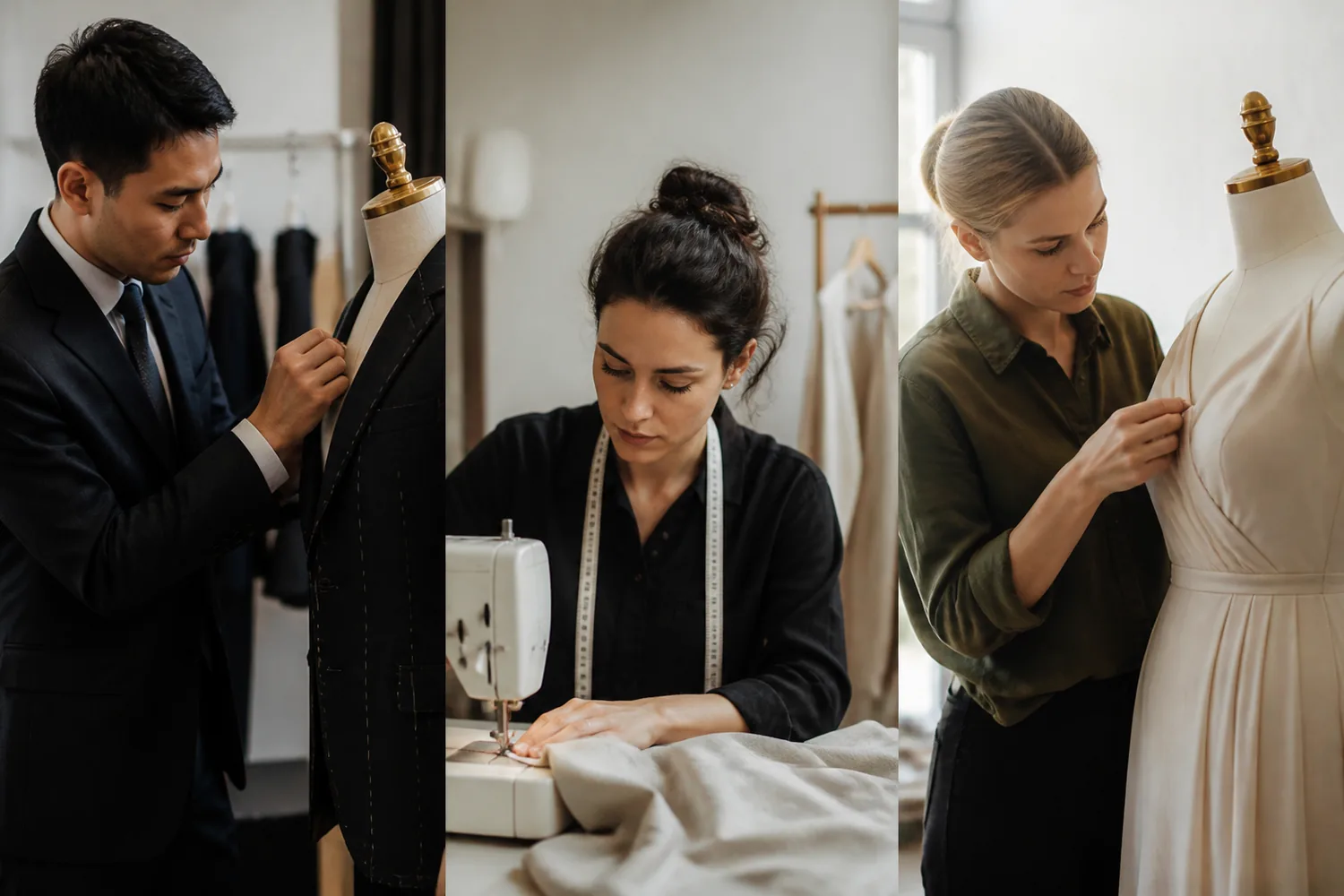
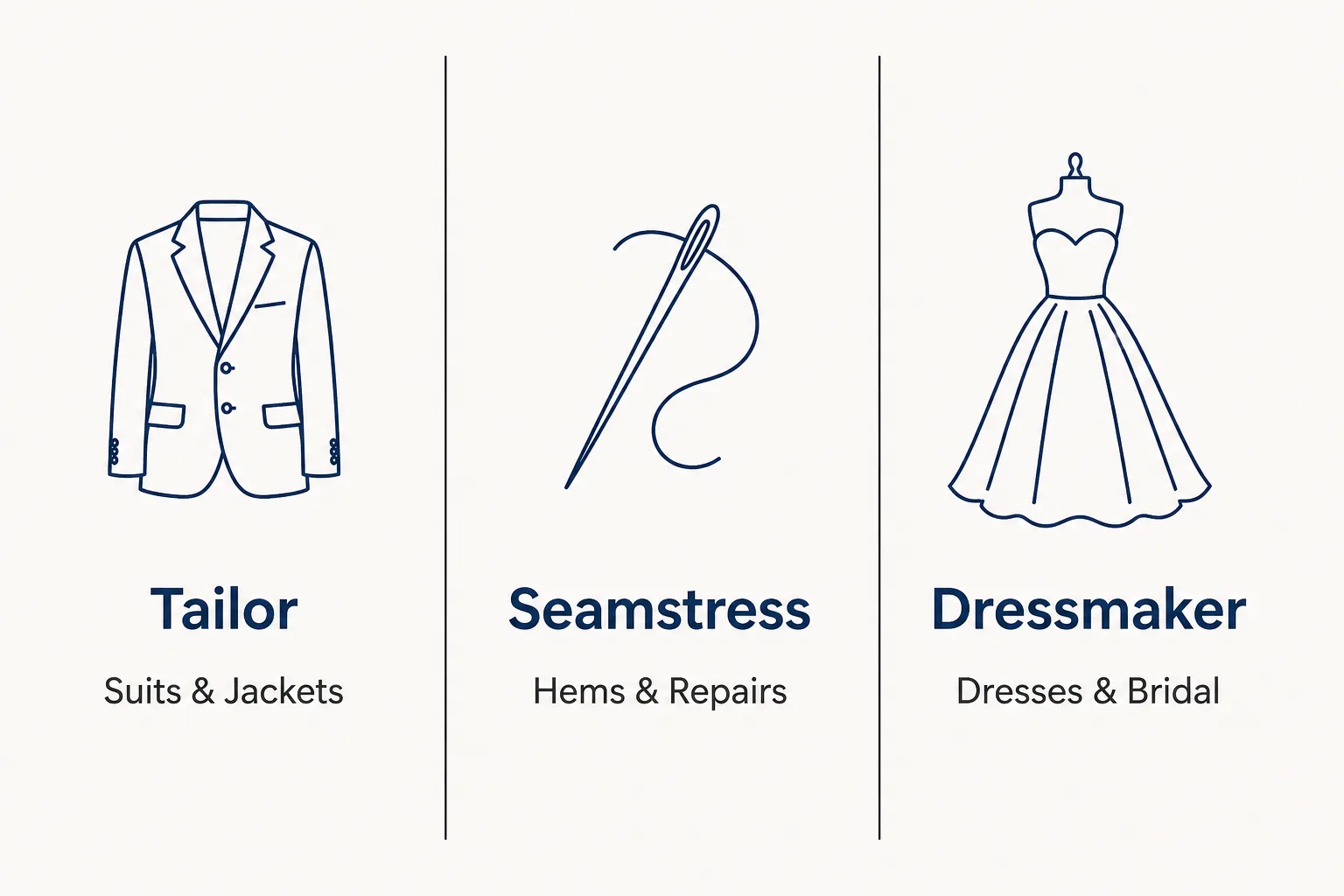
A tailor focuses on fit, pattern and garment construction, particularly for structured clothing such as suits, jackets, coats, trousers and formal shirts. That work relies on techniques most general sewers never use, such as pad-stitching lapels and collars to give them shape, or building a jacket around a horsehair canvas, all of which feature in how a bespoke suit is made. Tailors also make clothes from scratch, either fully custom and cut from an individual pattern, or made-to-measure and adapted from an existing block, and they typically work through several fittings to get the fit right.
A seamstress is a sewing professional most often associated with garment assembly, hems, repairs and general alterations, which covers jobs like replacing zips, sewing on buttons, taking in seams and fixing tears. Many also make softer garments such as skirts and blouses, and some take on curtains or soft furnishings. The title is no longer tied to gender, so anyone may use it.
A dressmaker creates, fits or alters dresses and other women's garments, often including eveningwear, occasionwear and bridalwear, where drape, lining and delicate fabric matter just as much as measurements.
In practice, though, the useful distinction is not the dictionary label but the garment in front of you and how complex the job is.
Which professional should you hire for each garment job?
Start with the garment, then think about how much of its structure the job touches. Here is how common jobs usually map.
Custom suit: choose a specialist tailor. A suit involves measurements, pattern work, canvas or interlining, balance between front and back, and repeated fittings, all of which sit firmly in a tailor's territory.
Blazer, sports jacket or coat alterations: choose a tailor, especially if the shoulders, chest, collar, lapels or lining are involved. These are structural adjustments rather than simple sewing jobs, and a poorly handled shoulder or collar is very hard to undo.
Trousers: a tailor is the right call for the seat, waist, rise, taper and overall fit of formal trousers. If all you need is a plain hem on a casual pair, though, a seamstress or alteration professional will usually do a perfectly good job.
Formal shirts: use a tailor when the collar, cuffs, sleeve pitch, body shape or a made-to-measure fit matters, whereas basic sleeve shortening on a well-constructed shirt can often be handled by a general alteration service.
Simple hems, loose seams, buttons, small tears and zip replacements: a seamstress or general alteration professional is usually enough, provided the fabric is not unusually delicate or expensive.
Custom dresses, dress resizing and eveningwear: a dressmaker is often the best fit, particularly where the bust, waist, drape, lining, lace, beading or skirt shape needs careful handling.
Bridal alterations: look for a dressmaker, bridal alteration specialist or tailor with direct experience of wedding gowns. Layers, boning, trains and fine fabrics make this some of the most demanding work in the trade.
Complex restyling: ask before assuming, because changing a neckline, rebuilding a jacket, reshaping a dress or altering a garment's structure may need a specialist rather than a basic alteration counter.
Where the roles overlap, skill matters more than the title
Many professionals use these titles loosely, so it pays to treat the label as a starting point rather than a guarantee. A tailor may alter dresses well, a seamstress may be highly skilled with complex garments, and a dressmaker may be excellent at everyday alterations. Gender assumptions are just as unreliable: tailors make suits and jackets for women as well as men, and seamstresses and dressmakers are not limited to women's clothing.
The better test is the garment and the risk, since the more structured, expensive, delicate or sentimental the piece, the more specialist experience matters. It also helps to remember that alteration and tailoring are not the same thing, and knowing what a tailor can and can't alter makes that distinction clearer. Shortening a hem changes one edge of a garment, while correcting jacket balance, reshaping shoulders or rebuilding a collar changes how the whole garment sits on the body.
Finally, don't be put off if someone turns your job down. Not every professional sews everything; some don't take wedding gowns, and others avoid alterations altogether. A maker who declines work outside their expertise, or refuses a rush job that would compromise quality, is usually showing good judgement.
What to ask before you book
A few direct questions are a big part of choosing the right tailor](https://www.patricknco.com/tailors-choose-right-custom-clothing/) and will quickly tell you whether you are in the right place.
1. Have you worked on this exact garment type before? Business suits, dinner jackets, formal shirts, bridal gowns, evening dresses and silk or other fine fabrics each demand different experience.
2. What level of alteration can you do? Find out whether they can adjust structure, balance, lining, shoulders or canvas, or whether they only shorten, take in and repair.
3. How many fittings will it take? A simple hem may need just one, while suits, bridalwear and custom garments usually need more, and a careful maker will rarely finish complex work without at least one fitting.
4. What is the turnaround? Ask before committing, especially if you are travelling or have a fixed event date.
5. Can I see similar work? Ask for examples of your garment type rather than general sewing photos, because a neat hem says nothing about structured tailoring or bridal alteration.
6. What should I bring? The shoes, shirt, undergarments or accessories you will wear with the garment affect both fit and length, so bring them to every fitting.
7. Can we confirm the scope in writing? Agree the work, delivery date, price range and any limits on what can realistically be changed. For made-to-order pieces a deposit of around 30 to 50 per cent is common, and having a written order makes any later disagreement far easier to resolve.
The safest choice if you are in Bangkok or travelling
If the garment is a suit, blazer, formal shirt, smart trousers or any structured menswear, go to a specialist tailor, because fit, balance and construction decide whether it looks right. If the job is a simple hem, a button, a loose seam or a minor repair, a general alteration professional may be all you need, and is often quicker and cheaper too.
For dresses, evening gowns and bridal garments, choose someone with specific dressmaking or bridal alteration experience rather than relying on a title. Bridal work in particular needs a generous time cushion, and for new wedding gowns salons often advise ordering many months ahead.
If you are visiting Bangkok, build your fittings into your itinerary. Book early in your stay so there is time for at least one fitting and any adjustments afterwards, rather than expecting a suit or a restructured jacket to be perfect on your last afternoon.
In the end, name the garment, judge how much of its structure the job touches, and book accordingly.